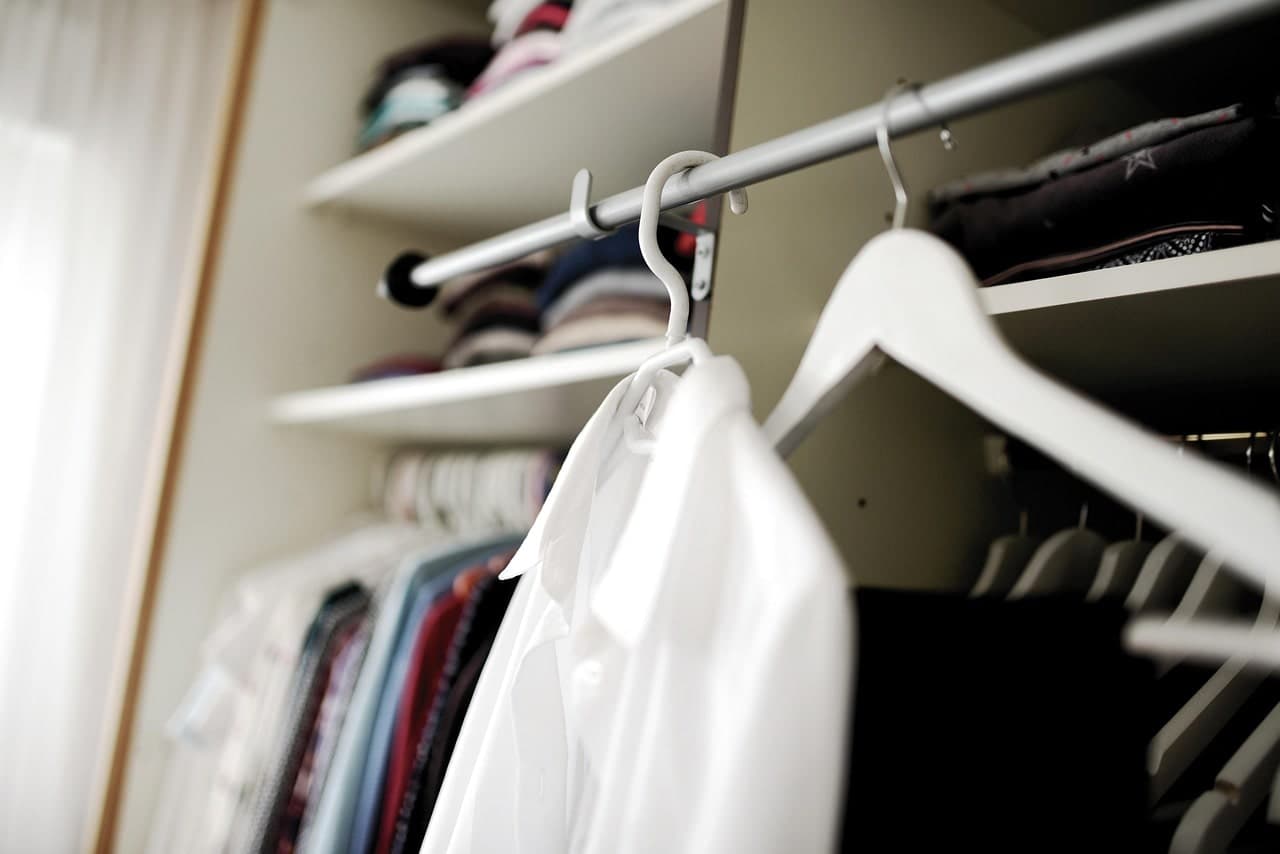
The standard builder-grade closet is just a rod and a shelf. Fine for hanging clothes, terrible for actually organizing your stuff.
You don't need a $5,000 custom closet system. A few smart additions can transform a basic closet into something that actually works.
Assess What You Have
The Standard Setup
Most closets come with:
- Single rod at about 66" from the floor
- Single shelf above the rod
- That's it
The Problem
This setup wastes space:
- Below hanging clothes: Wasted floor space
- Above the shelf: Wasted vertical space
- Short items: Take as much rod space as long items
What to Measure
Before buying anything:
- Width: Inside wall to inside wall
- Depth: Back wall to door opening
- Height: Floor to ceiling
- Obstructions: Light fixtures, outlets, vents
- Door clearance: How far can doors open?
Quick Wins (No Installation Required)
Hanging Organizers
Fabric hanging shelves:
- Hang from existing rod
- Great for sweaters, bags, accessories
- Instant vertical storage
- $15-30 at most stores
Over-Door Organizers
Use the back of closet doors:
- Shoe pockets
- Belt/scarf hooks
- Full-length mirror with storage
- No holes required
Shelf Dividers
Those wire dividers that clip onto existing shelves:
- Keep stacks from toppling
- Create sections for different items
- Easy to reposition
Double Hang Rods
Hang a second rod from the existing one:
- Doubles short-item capacity instantly
- Adjustable heights
- $10-20 for the rod and brackets
Basic Upgrades (Some Installation)
Additional Shelving
Above existing shelf:
- Most closets have 2+ feet of unused space above the top shelf
- Add 1-2 more shelves for seasonal or rarely-used items
- Wire shelving is cheapest and easiest
Along sidewalls:
- Short shelves on the sides for shoes, bags, bins
- Utilize the "dead" corners
Replacing Wire with Solid Shelving
Wire shelving is cheap but:
- Items tip into the gaps
- Can't use small storage containers
- Looks utilitarian
Melamine or wood shelving:
- Flat surface works with any container
- Better appearance
- Can paint to match
Drawer Units
Freestanding or install-in-place:
- Perfect for folded items
- Keeps things dust-free
- Can stack or mount to wall
Closet Rod Configurations
The Standard Single Rod
- Works for: Long dresses, coats, robes
- Wastes: Vertical space for shirts, pants, skirts
Double Rod
- Upper rod at ~80" for shirts
- Lower rod at ~40" for pants/skirts
- Doubles capacity for short hanging items
Triple Configuration
For maximum efficiency:
- Upper rod at ~80" for shirts
- Lower rod at ~40" for pants
- Long section at standard 66" for dresses/coats
Rod Placement Tips
- Minimum clearance: 36" from rod to shelf above
- Shirts: Need about 38" of vertical space
- Pants/skirts: Need about 34" (folded) or 50" (full length)
- Dresses/coats: Need 60-70" depending on length
Common Closet Problems (and Fixes)
Sliding Doors That Stick
Problem: Doors drag, jump track, or won't slide smoothly.
Fix:
- Check the track for debris — vacuum it out
- Lubricate the track with silicone spray
- Adjust the rollers (screw at bottom of door)
- Replace worn rollers if needed ($5-15)
Bifold Doors That Won't Close
Problem: Doors gap, won't fold properly, or come off track.
Fix:
- Check top pivot bracket alignment
- Adjust the bottom pivot (usually screws up/down)
- Check for warped panels
- Replace pivot pins if worn
Sagging Rods
Problem: Rod bends under weight of clothes.
Fix:
- Add a center support bracket
- Replace with a thicker rod
- Move heavy items to the ends (less leverage)
Shelf Bracket Failure
Problem: Brackets pull away from wall or break.
Fix:
- Install into studs (not just drywall)
- Use toggle bolts if no stud available
- Add more brackets (distribute weight)
- Replace with heavy-duty brackets
Wire Shelving Systems
The Budget Option
Wire systems (like ClosetMaid) are:
- Cheapest option
- DIY-friendly
- Widely available
- Adjustable
Installation tips:
- Find studs and mark before you start
- Use the wall clips AND end brackets
- Level matters — check frequently
- Don't skip support brackets for long spans
Cutting Wire Shelving
You can cut wire shelving with:
- Hacksaw
- Bolt cutters
- Oscillating multi-tool
Cut between the wires and file any sharp edges.
Modular Systems
The Middle Ground
Systems like IKEA PAX or Elfa offer:
- Customizable configurations
- Mix of open and closed storage
- Better appearance than wire
- More investment than basic wire
Planning Tips
- Use the store's planning tool
- Measure three times
- Leave 1" clearance from walls
- Account for baseboards
What About Custom Closets?
When It Makes Sense
- Complex layouts or odd-shaped closets
- High-end finishes needed
- Maximum space optimization
- Walk-in closets with specific needs
When to Skip It
- Standard reach-in closets
- Rental properties
- Budget is limited
- DIY systems would work fine
Installation Considerations
DIY-Friendly
- Freestanding units
- Tension rods
- Over-door organizers
- Hanging fabric shelves
- Basic wire shelving
Moderate DIY
- Solid shelving into studs
- Modular systems
- Closet rod reconfiguration
- Drawer units
Consider a Pro
- Complex multi-level systems
- Closets with electrical/plumbing
- Built-in cabinetry
- Sliding door repairs
- Large walk-in closet buildouts
The Bottom Line
You don't need to gut your closet and start over. Often, a combination of quick additions and a few installed upgrades can double your usable space.
Start with the no-install options, see what works, then add permanent solutions where they make sense.
Need Closet Help?
We install shelving, repair closet doors, and help maximize storage space throughout the High Plains region. From a single shelf to a complete closet reorganization.
Check out our full Home Repair Services or see our Closets & Storage service for details.
Related posts:
- Furniture Assembly: Tips for Stress-Free Setup — Including freestanding closet organizers
- Fixing Squeaky Doors and Sticky Hinges — Including closet door fixes